
The CM2 product family
CM2 Digital Towfish
The CM2 towfish incorporates dual frequency operation, with a choice of two configurations, DF (100/325kHz) and EDF (325/780kHz).
For general survey tasks DF towfish are often the most useful. In 100kHz mode the search swath is up to 1000m wide, useful for searching for larger objects such as wrecks or freight containers. In 325kHz mode it is usually possible to distinguish such objects as mooring ropes, anchor chain, anchors, scour marks, pilings, crab pots, rocks (down to the size of a briefcase or less), as well as differences in seabed texture.
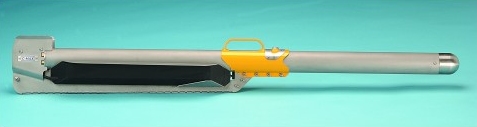
The CM2 Standard towfish. Specifications
EDF towfish offer the highest resolution. Like the DF towfish they offer 325kHz operation out to 150m. The EDF's 780kHz frequency gives the most detailed images, very useful for positively identifying an object first located at 325kHz.
Note that the complex HF sonar transducer configuration in both types of towfish is unique to C-MAX. It produces powerful, flat-topped transmit and receive beams complemented by additional coverage below the towfish. This gives wide high quality images and enhanced immunity from surface reflections.
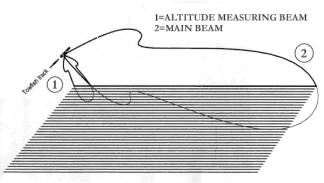
C-MAX's unique towfish beam pattern
All of the towfish models feature:
- Digitally controlled dynamically-optimised gain profile
- Automatic towfish altitude measurement
- Seabed proximity alarm
- Breakaway mechanism with a safety link
- Adjustable depression angle for the transducers
- Water temperature sensor